
By Appbay Technologies
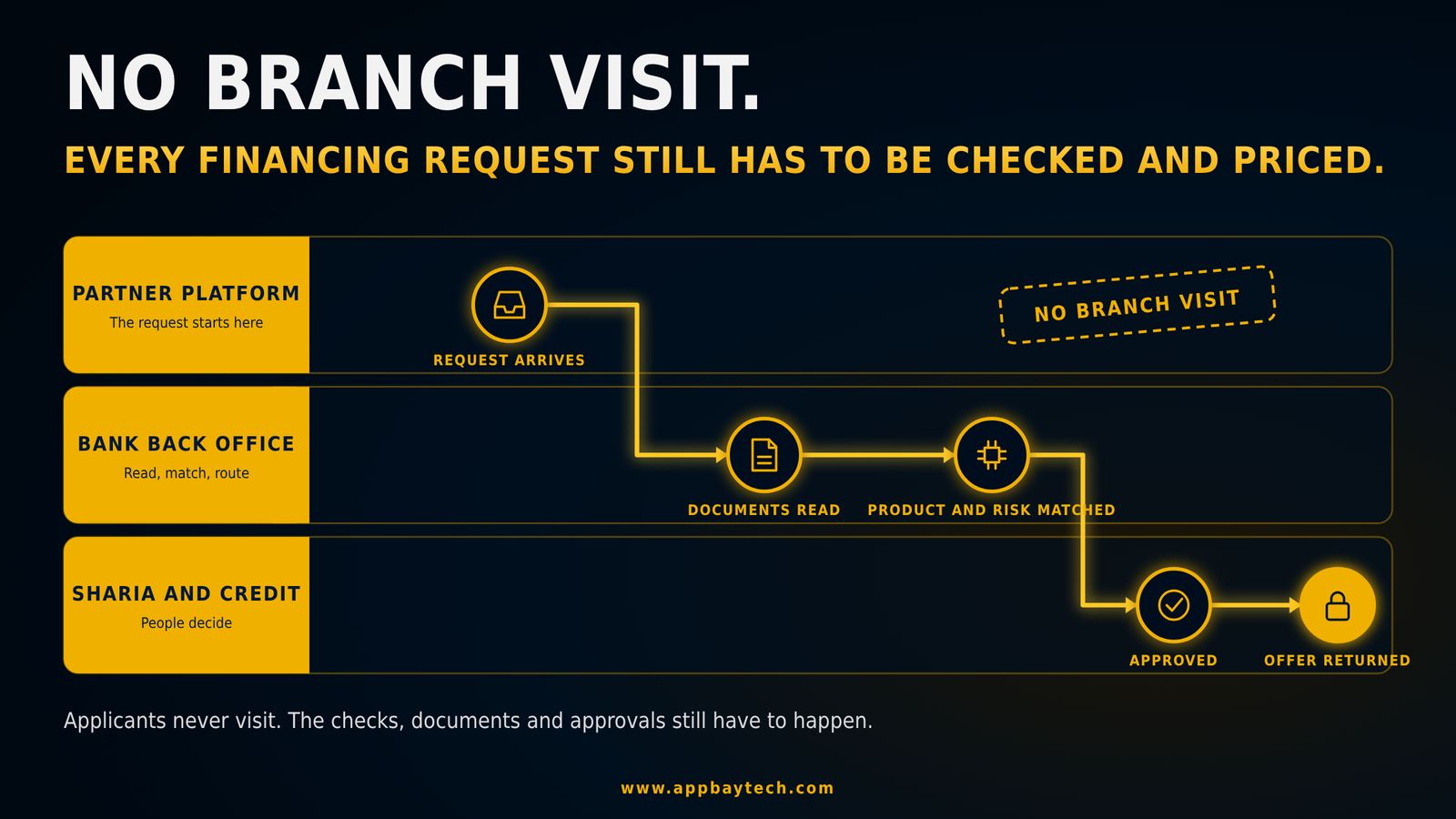
An Egyptian incumbent-backed standalone digital bank is preparing to serve consumers and micro-businesses entirely on screen. The central bank has confirmed the move and published a fresh framework for remote identity. For customers, that is a real step toward easier access to banking. It also changes where the work happens: a branch used to handle identity, documents and explanation in one place.
This piece is a candid one. The fit is partial. The exception workflow is close to what we build, while the bank’s own rules and integrations are configuration work. We’ll be specific about which is which.
The Priority: Innovation and Digital Transformation
Launching a branchless bank is a named, dated and regulator-confirmed priority. It also arrives in a competitive field, with two other incumbent-backed digital banks in the market and a board that has backed the investment. That raises a practical question: when an applicant never visits a branch, who handles the files that don’t pass first time?
The Hidden Problem: Exceptions With No Counter to Absorb Them
Here is where the operational gap can show up inside a new digital bank:
- eKYC mismatches queued – identity data that doesn’t match, waiting for a person
- Micro-business papers checked by hand – business documents that remote verification can’t clear
- Applicants dropping mid-review – customers lost while a file waits
- Activation waiting on review – accounts that can’t go live until someone decides
Why does this exist? A pre-launch bank designs the happy path first. Remote verification clears clean applicants, but mismatches, flagged cases and micro-business files still need a person. These symptoms are reasonable inferences about banks launching this model, not facts about any one bank.
Why This Matters Now
The digital bank is funded. What does each onboarded customer cost?
Is straight-through onboarding lowering what each customer costs us, or only moving the work somewhere less visible?
The group backed the investment and now wants cost per onboarded customer and time-to-activation in the next board pack. For the COO, the Head of Operations and the Chief Risk Officer, this plays out across four measures:
- Cost per onboarded customer – what each customer costs once exception effort is counted
- Time-to-activation – how long an applicant waits before the account is live
- Straight-through onboarding rate – how many applicants clear without a person
- Payback on platform spend – how quickly the investment earns back
Without that visibility, exceptions pile up behind the automated path, applicants drop out mid-review, and cost per onboarded customer climbs just as volume is meant to scale.
An Honest Look at the Fit
This is a partial fit, with configuration work. We would not replace the eKYC or the front end. The credible role is the exception workflow behind them.
What transfers directly:
- Universal Identity Copilot and Master Compliance Copilot for matching and review
- Appian case management and routing
- Document intelligence for micro-business files
- Audit IQ-style reporting for every decision
What is configuration work, not a ready product:
- The bank’s own onboarding exception rules
- Integration with the central bank’s identity platform
- Integration with the bank’s core system
We have not verified which vendors the bank is using, so integration scope is unknown. Risk appetite and compliance decisions stay with the bank. AI supports the checking and does not make the call. Here is what it would involve:
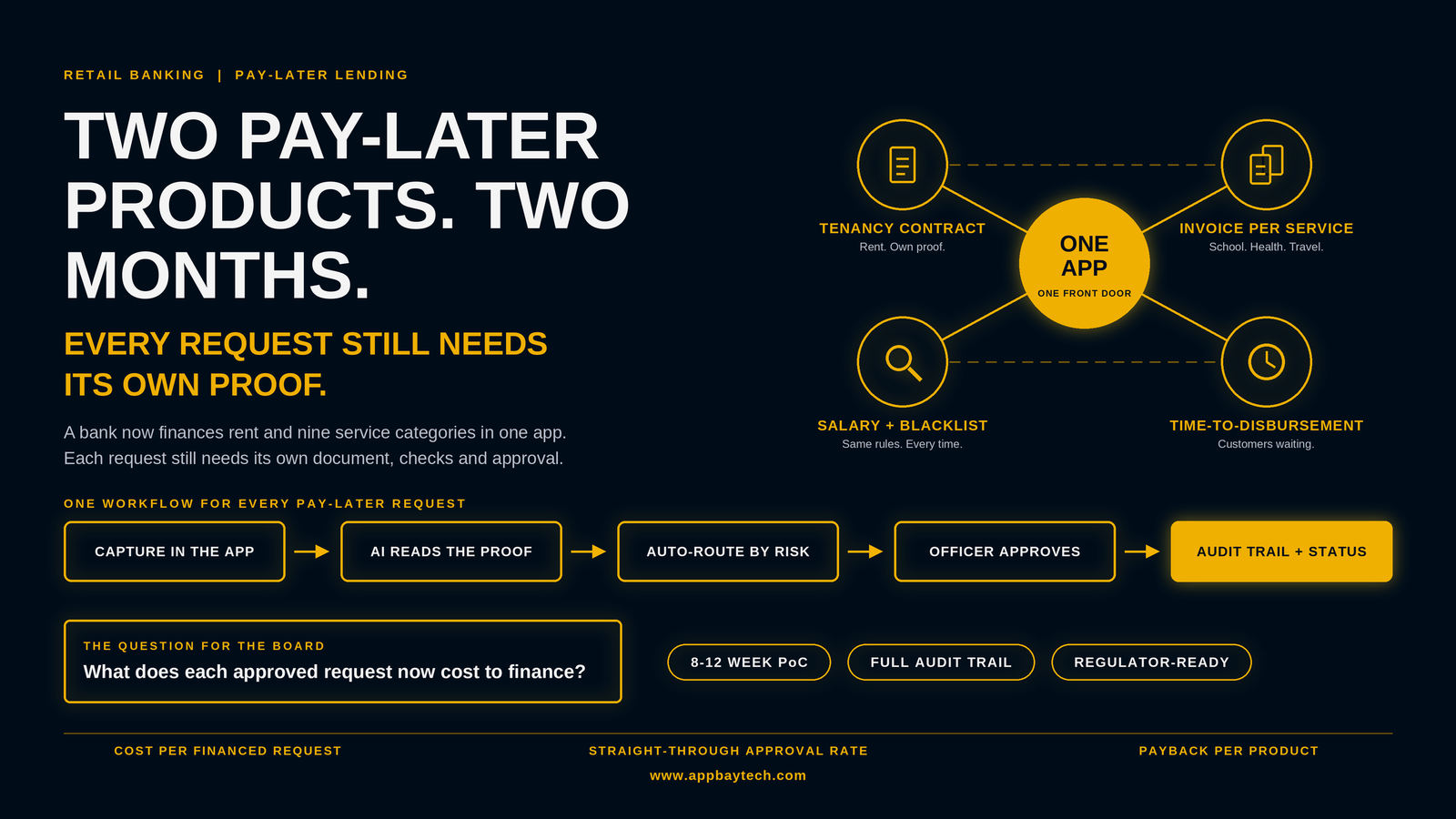
- Flagged application arrives – brought into one governed workflow
- AI compares data and documents – mismatches and missing proof surfaced at intake
- Auto-route by segment and risk – each case reaches the right team with evidence assembled
- Compliance officer decides – every decision remains with a person
- Audit trail and customer status – every step on record
The practical starting point is a scoped 8-12 week proof of concept on one segment’s exceptions, for example micro-business files. It would show whether routing by segment and risk shortens time-to-activation without loosening checks. It would not cover all onboarding.
Why We’re Saying This Plainly
Being upfront matters more here than a confident pitch. A digital-native bank may build much of its stack in-house, and the eKYC and front end are not ours to replace. The exception workflow is where we can help, and naming that clearly, then starting with one segment, is more useful than overstating the fit.
This Pattern Isn’t Unique to One Bank
Any institution launching without branches will meet the same constraint: remote verification clears the clean files, but flagged cases and business papers still need a person. The banks getting ahead of this route exceptions by segment and risk from day one, keep a person deciding, and prove it on one segment first.
Let’s Compare Notes
We’re curious how digital banks are handling onboarding exceptions without a branch to fall back on. If your organization is working through the same challenge, we’d welcome the conversation.
Send us a message at sales@appbaytech.com or visit www.appbaytech.com. This one is genuinely about comparing notes, not a pitch.