
By Appbay Technologies
Launching pay-later products makes the headline. Making sure every request carries the right proof is the work that follows.
A Jordanian bank now finances rent and nine service categories through its mobile app. Two pay-later products are live within about two months. A launch this fast, tied to a clear customer goal, signals real intent. It also raises a practical question: behind one simple app, how many different proofs does each request still have to pass?
This piece is a candid one. The fit is a good one with some configuration work, and we’ll be specific about which parts are which.
The Priority: Innovative Pay-Later Products, Fast
Letting customers pay for rent, schooling, healthcare and travel over time is a clear and worthwhile priority. It widens access for customers. It also answers competitive pressure, because a non-bank pay-later entrant has already received an initial approval and is moving into the same space.
Speed matters here. When two products reach the market within two months, the front end has to be quick, simple and reliable. The app is where the customer sees the bank’s promise.
That creates a real operational question: does the single front door lead to a single journey, or to the same review desk with more paperwork behind it?
The Hidden Problem: One App, Many Proofs
Here’s where the operational gap can show up, inside a bank running several pay-later categories:
- Tenancy contracts checked one by one. A rent request needs its own contract, read and matched to the customer and the amount requested.
- An invoice or quote for every service type. Schooling, healthcare and travel each bring a different document with different details to verify.
- The same eligibility rules, every time. Salary, cheques and blacklist checks apply to each request, whatever the category.
- Proof gaps found late. A missing page or an unclear invoice is discovered after the customer has already been waiting.
- Customers waiting for approval. Each request queues behind a review desk that grows with every new category.
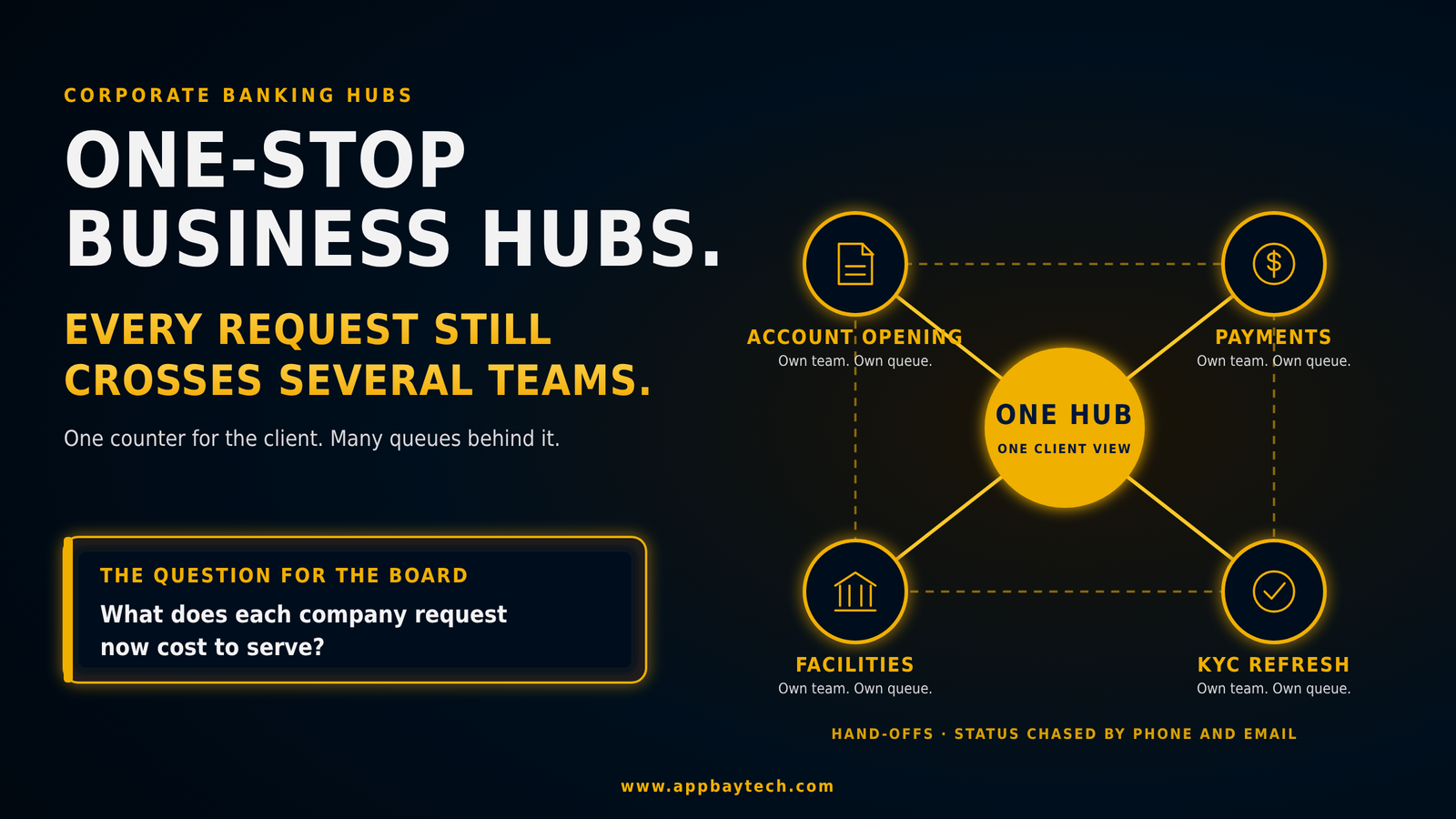
Why does this exist? A fast app front end doesn’t unify the checks behind it. The app captures one request in one smooth flow. The back end then has to verify a different document for each category, apply the same eligibility rules, and route the request to a credit approval.
When each new pay-later category adds new document types and checks to the same desk, the customer sees one app and the bank runs several separate review processes. The launch gets faster. The review work behind it does not.
Why This Matters Now
The products are live. What does each approved request now cost?
The board backed the innovation. It now wants cost per financed request and payback on the next pack. The question that follows isn’t rhetorical:
“Have the new products made each request faster and cheaper to approve, or only quicker to start?”
For the Head of Retail and the COO, this plays out across four measures:
- Cost per financed request: what each approved request costs once review effort is counted
- Time-to-disbursement: how long a customer waits from request to funds
- Straight-through approval rate: how many requests are approved with no manual rework
- Payback per product: whether each product earns back what it cost to build and run
These four are the language of an executive committee. They turn a launch into a business case.
Without that visibility, the app improves the front-end experience, but cost per request and time-to-disbursement drift upward as volume grows. Each new pay-later category adds document types and checks to the same review desk. The investment is then hard to show, because the numbers the board asks for are the ones nobody can see.
An Honest Look at the Fit
We want to say this plainly: this is a good fit, with configuration work. Document-heavy lending, with verification, routing, approval and audit, sits in Appbay’s core strength. Appian is built for orchestrating requests across teams: intake, risk-tiered routing, approval and audit trail.
What transfers directly:
- LoanSphere for origination and decisioning
- Document intelligence for reading contracts and invoices
- Appian intake and routing for every pay-later request
- Audit IQ-style reporting for every decision
What is configuration work, not a ready product:
- Document rules for each service category. A tenancy contract and a school invoice are checked for different things.
- The bank’s published eligibility rules. Salary, cheques and blacklist checks are public, which makes them easy to encode.
- Integration with the mobile app and core systems. How the front end hands over a request, and how the decision flows back, depends on how the bank has built them.
What is not covered:
- Payouts to landlords and service providers.
- Repayment servicing.
Credit decisions, risk appetite and every approval stay with the bank. AI supports the analysis and does not make the call.
The right scope is one pay-later product, not all nine categories. We have assumed nothing about how the bank processes requests today, so any naming here should be adjusted to the bank’s own product catalogue.
Here’s what that would actually involve
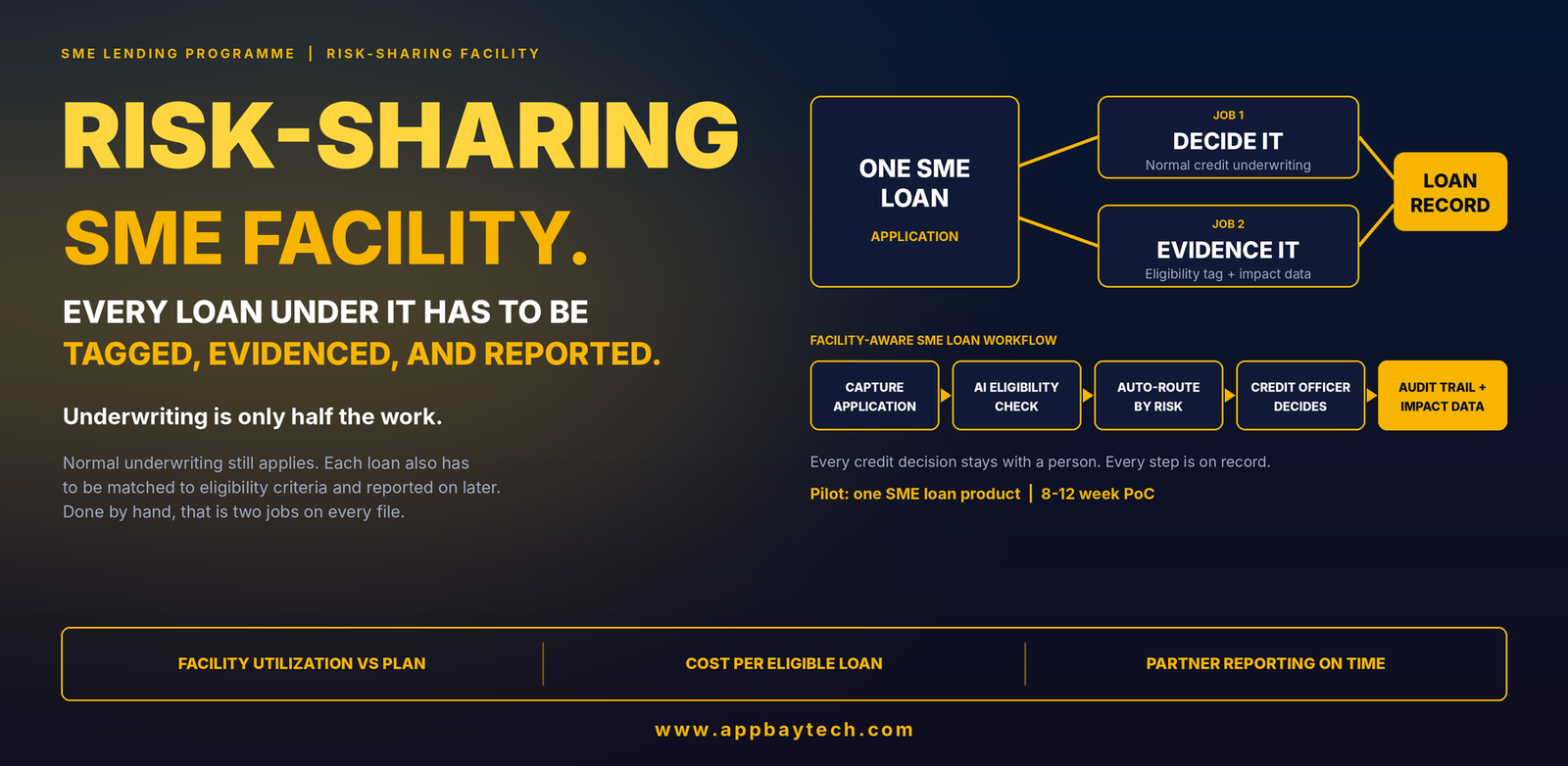
Capture the Request in the App One governed workflow from the customer’s tap, instead of a hand-off by email.
AI Reads the Contract or Invoice Files are checked as they arrive, with gaps flagged before the request moves on. A missing page is caught at intake, not after days of waiting.
Auto-Route by Product and Risk Each request reaches the right reviewer with the evidence already assembled, so the reviewer starts from the proof and doesn’t have to chase it.
Credit Officer Approval Every approval remains with a person. The system prepares the file and the officer decides.
Audit Trail and Status Every step and decision is on record, and the status of each request is visible in one place.
The practical starting point is a scoped 8-12 week proof of concept on one pay-later product, for example rent. It would show whether reading and routing proof once, at intake, shortens time-to-disbursement without loosening checks. It would also give the bank its first real numbers for cost per financed request and straight-through approval rate. It would not cover all nine categories, and extending it would be a larger conversation about scope.
Why We’re Saying This Plainly
Being specific matters more than a broad claim would. This problem sits close to what Appbay already builds, so the honest message is that we can scope it clearly. The document rules, eligibility checks and integrations are configuration work that depends on how the bank has designed its products and its app. Naming that up front is more useful than overstating it.
This Pattern Isn’t Unique to One Bank
Any bank launching pay-later products will face the same constraint: the front end is one flow, but each request type still needs its own document, its own checks and a credit approval. Rent, schooling, healthcare and travel are only the first examples. Every new category adds another proof to verify.
The banks getting ahead of this read and route proof at intake and keep a person approving. Speed then holds up as volume grows, and the product lowers cost per request instead of only looking better at the front.
Let’s Compare Notes
We’re curious how other banks are verifying proof across pay-later products without slowing approvals. If your organization is working through the same challenge, we’d welcome the conversation.
Send us a message at sales@appbaytech.com. This one’s genuinely about comparing notes, not a pitch.