
By Appbay Technologies
A Jordanian Islamic bank has a proposed package covering SME lending, green projects and trade finance, alongside fresh capital. That is a meaningful step for growth, and worth recognizing. It also comes with conditions: development funding carries use-of-proceeds requirements, so every sub-loan has to be matched to its use, evidenced and tracked in one record.
This piece is a candid one. This is a good fit with configuration work, and two parts sit outside what we would deliver. We’ll be specific about which is which.
The Priority: Sustainable Growth
A proposed package plus fresh capital is a named, specific move, with growth and market share at stake and a board accountable for the new capital. That raises a practical question: once the money is lined up, who proves where each financing went?
The Hidden Problem: Every Loan Needs a Use of Proceeds
Here’s where the operational gap can show up, inside a bank drawing on development funding:
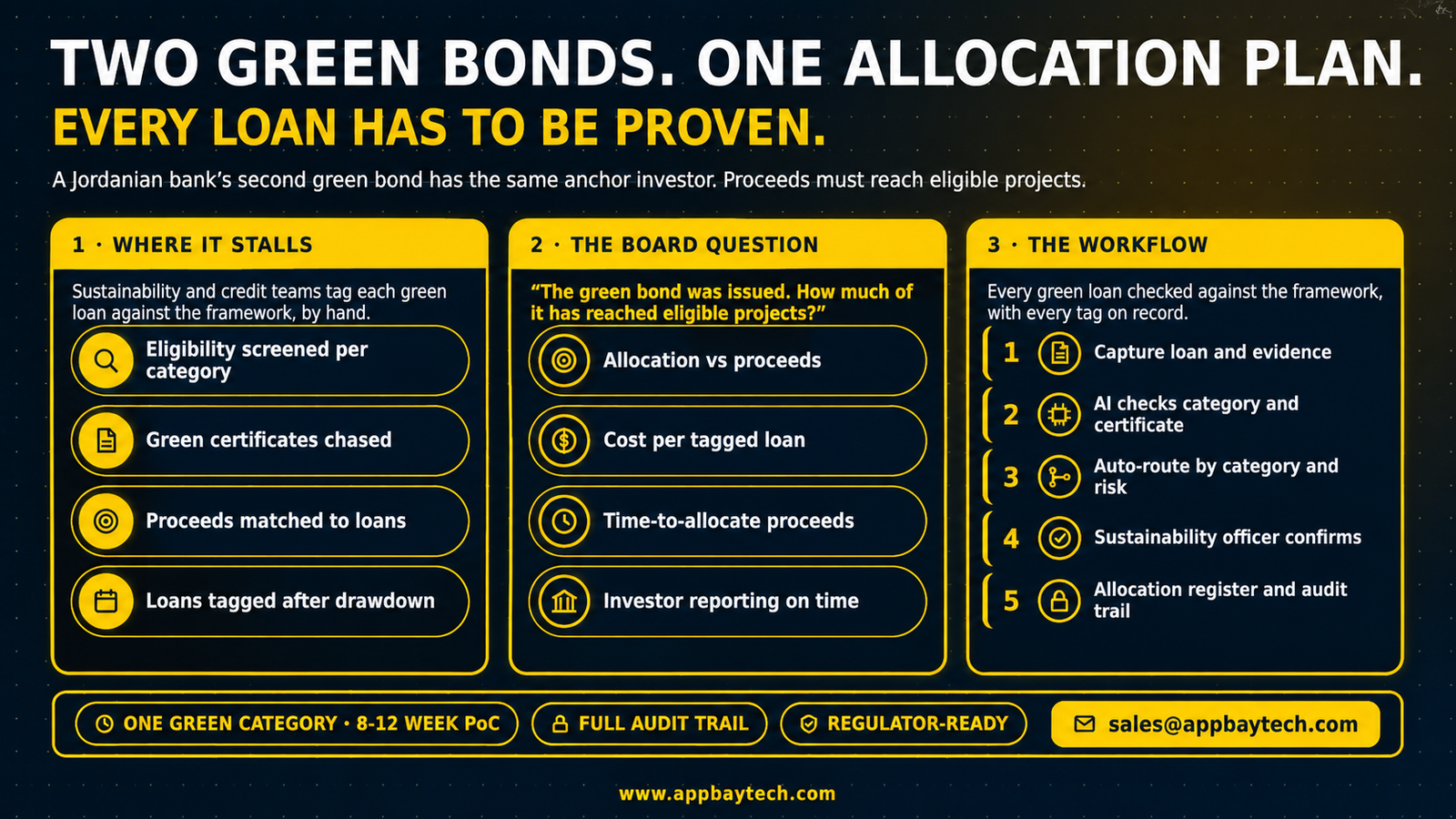
- Eligibility screened per use – each sub-loan checked against the funder’s criteria for its category
- Green building certificates chased – project files requested after the loan is made
- Sub-loans matched to proceeds – linking every drawdown to the use of proceeds it belongs to
- Loan use evidenced after drawdown – eligible loans missed or tagged late
Why does this exist? Development funding comes with use-of-proceeds conditions. Each sub-loan has to be matched to a use (SME, climate-eligible, green building or trade), evidenced, and tracked in one record. These symptoms are reasonable inferences about banks in this pattern, not facts about any one bank.
Why This Matters Now
The funding was lined up. What does each evidenced loan cost to book?
The board added capital and funding, and now wants cost per tagged loan and return on the new capital. The question that follows isn’t rhetorical:
“Can we show, loan by loan, where the money went, and what each evidenced loan cost us to book?”
For the CFO, the Head of SME and the Head of Sustainability, this plays out across four measures:
- Return on new capital – what the added capital earns once deployed
- Cost per tagged loan – what each loan costs to screen, evidence and record
- Proceeds deployed vs plan – how much of the funding has reached eligible lending
- Funder reporting on time – whether reports go out when due
Without that visibility, the money is lined up, but each loan’s use is evidenced late and by hand, eligible loans are missed, and reporting to the funder slips.
An Honest Look at the Fit
We want to say this plainly: this is a good fit, with configuration work. The credible role is the intake, evidence and allocation workflow behind each loan.
What transfers directly:
- Appian intake, routing, approval and audit trail
- Document intelligence for SME and green-building files
- LoanSphere for the SME loan journey
- Audit IQ-style reporting for the allocation record
What is configuration work, not a ready product:
- The funder’s eligibility criteria
- The allocation record format
- Reporting templates
- Integration with core and loan systems
What is not covered: the Islamic contract structuring itself, and the trade line. We have not verified what trade finance reporting a funder may require, so we would scope that part out. Credit and Sharia decisions stay with the bank. AI supports the checking and does not make the call.
Here’s what that would actually involve:
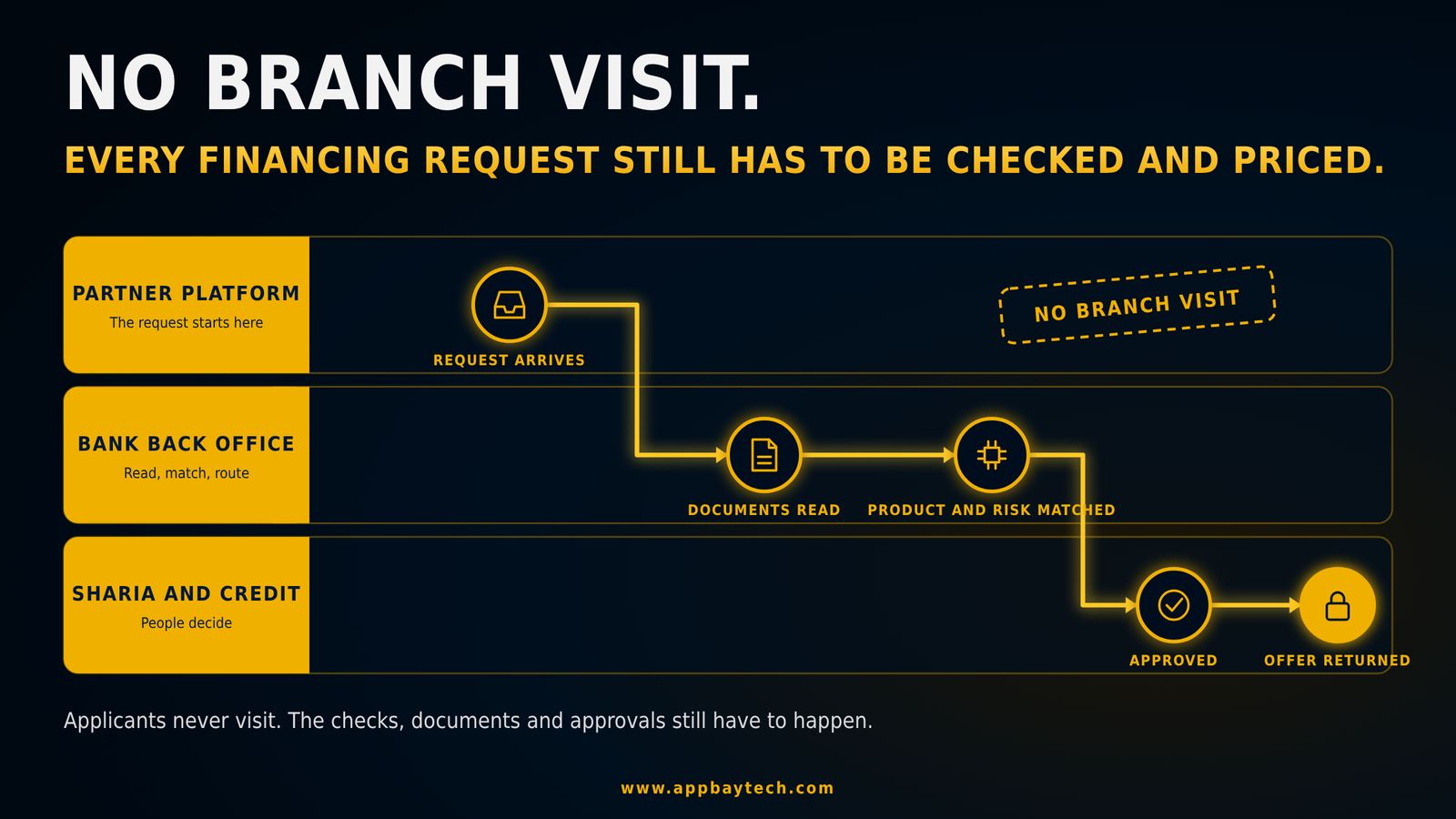
Capture Application and Evidence
Brought into one governed workflow at drawdown.
AI Checks Eligibility and Certificates
Eligibility gaps and missing proof surfaced early.
Auto-Route by Use and Risk
Each loan reaches the right reviewer with the evidence assembled.
Credit and Sharia Officers Approve
Every decision stays with a person.
Allocation Record and Audit Trail
Every step on record, ready for funder reporting.
The practical starting point is a scoped 8-12 week proof of concept on one SME segment. It would show whether tagging each loan to its use of proceeds at drawdown lets the allocation record build itself. It would not cover the whole package, and extending it would be a larger conversation about scope.
Why We’re Saying This Plainly
Being upfront matters more here than a confident pitch would. Contract structuring and trade reporting sit outside what we would deliver, and credit and Sharia decisions belong to the bank. The evidence and allocation trail is where we can help, and starting with one segment is more useful than overstating the fit.
This Pattern Isn’t Unique to One Bank
Any bank drawing on development funding will meet the same constraint: every loan has to be matched to a use of proceeds, evidenced and reported on later. The banks getting ahead of this tag each loan at drawdown, with credit and Sharia officers approving, so the record builds itself.
Let’s Compare Notes
We’re curious how Islamic banks are evidencing use of proceeds without slowing financing. If your organization is working through the same challenge, we’d welcome the conversation.
Send us a message at sales@appbaytech.com or visit www.appbaytech.com. This one is genuinely about comparing notes, not a pitch.