
By Appbay Technologies
A provision is a lagging number. Seeing the trend earlier is the work that follows.
A Saudi bank recently reported higher underlying operating income, yet a sharp rise in provisions for credit losses kept profit growth modest. At the same time, it is expanding SME and corporate lending. For a board, that combination turns into a pointed question: did we see it coming?
This piece is a candid one. The fit is partial and needs new accelerator work, and we’d rather say that plainly than force a confident pitch.
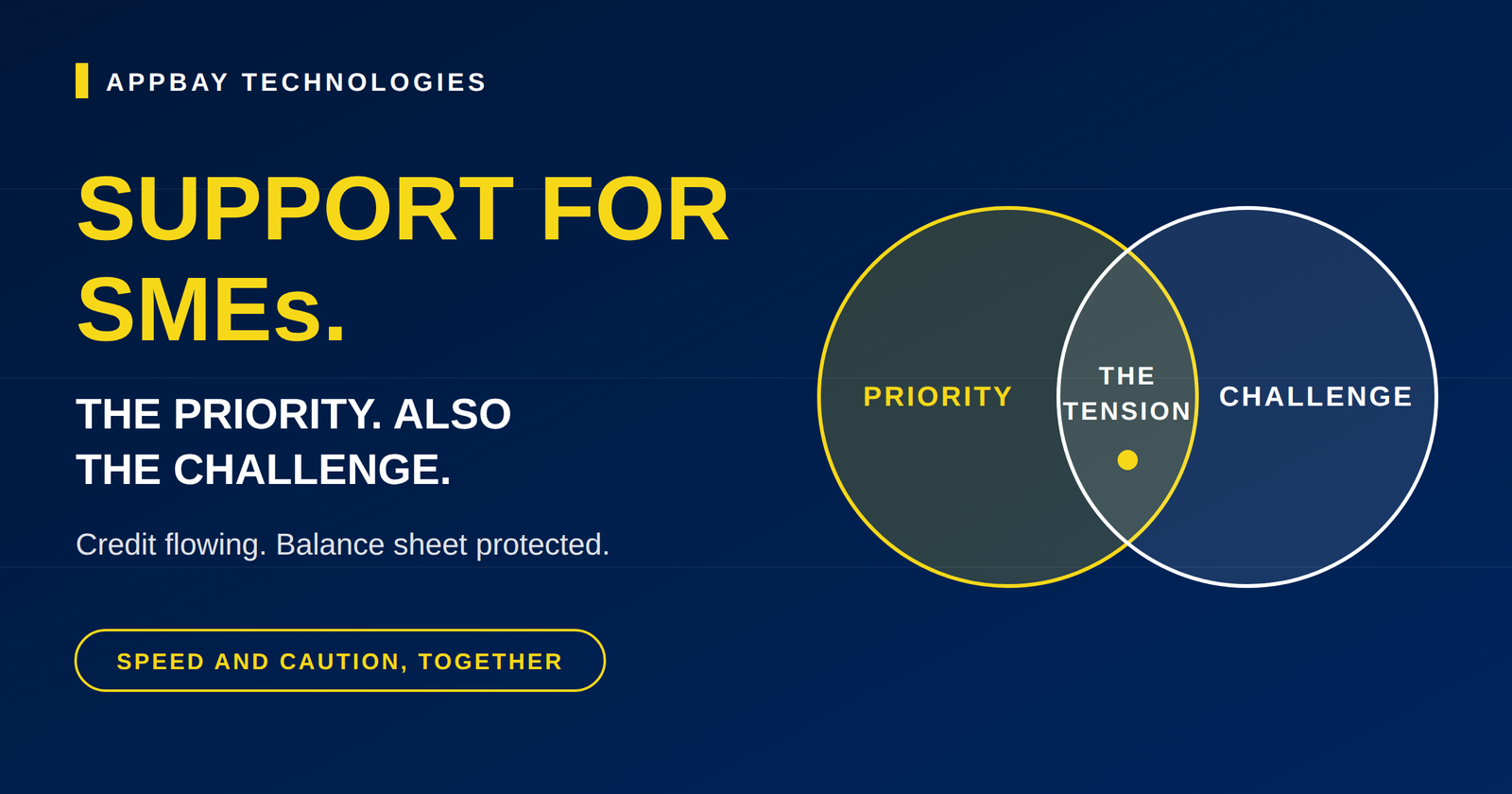
The Priority: Growing the Lending Book While Protecting the Result
Modernizing the digital core, deepening corporate relationships, and supporting SMEs are all clear and reasonable priorities. Each one adds credit exposure, and growth in lending is judged against what provisions do next.
That creates a real operational question: do early signs of credit deterioration reach credit and finance teams in time, or only after they have compounded?
The Hidden Problem: Signals in Different Places
Here’s where the operational gap can show up, inside a bank growing its SME and corporate books:
- Financials chased manually – statements gathered case by case
- Covenant breaches found late – noticed after the pattern has built
- RM notes not escalated – early context stays with the relationship manager
- Provision surprise at quarter-end – the trend becomes visible only when it is booked
Why does this exist? Banks in this position often hold credit signals across transactions, financials, covenants, and relationship notes, assembled one case at a time. Provisions are recognized after deterioration, which makes earlier visibility the lever. Volume and thin files in SME and micro lending make early-warning signals harder to catch case by case, and corporate relationships spanning treasury and international services concentrate exposure across products in ways that are hard to see in one view.
Why This Matters Now
Income grew. Provisions took the gain. What does the bank show the board next quarter?
Modernization spend has been approved. The board now wants to see the cost of risk line move. The question that follows isn’t rhetorical:
“Did our risk signals surface early enough, or did the provision arrive as a surprise?”
For the CRO and CFO, this plays out across four measures:
- Cost of risk trend – whether it is stabilizing or still rising
- Provisions versus income growth – how much of the gain is being absorbed
- Provision coverage trend – whether coverage builds ahead of deterioration
- Board reporting line – what the bank can evidence, quarter after quarter
Until the bank can show it is seeing risk earlier, growth in SME and corporate lending keeps being read against rising provisions.
An Honest Look at the Fit
We want to say this plainly: this is a genuine partial fit, not a clean product match. Appbay’s core strength is regulated lending and compliance workflows. A continuous credit early-warning capability is new accelerator work, not a repurposed product.
Where there is a credible fit: document intelligence for financial statements and covenants, and Audit IQ-style auditable routing, both transfer. Credit-model and provisioning logic stays with the bank’s risk function. The aim is earlier visibility and a cleaner record, not a promise to fix provisioning.
Here’s what that would actually involve, in principle:
Ingest Financials and Covenants
Customer financials and covenant data brought into one governed workflow.
AI-Flagged Deterioration Signals
Early signs of stress surfaced before they show up in the quarter-end number.
Auto-Route to the Credit Officer
The right case reaches the right person, with the evidence already assembled.
Human Review and Decision
Every flagged case is reviewed and decided by a person. AI supports the analysis and does not make the call.
Full Audit Trail
A single record of what was flagged, who reviewed it, and what was decided.
The practical starting point is a scoped 8-12 week proof of concept on one segment, for example SME. It would show whether earlier signals reach credit officers in a usable form, and it is a candid basis for a scoping conversation.
Why We’re Saying This Plainly
Being upfront matters more here than a confident pitch would. The evidence gap is real and worth solving, but it sits closer to portfolio monitoring than most of what we build. The honest starting point is to name that clearly, rather than stretching an existing product to fit a problem it wasn’t specifically built for.
This Pattern Isn’t Unique to One Bank
Any institution expanding lending while provisions rise will be asked the same question: did we see it early enough? The banks getting ahead of this aren’t waiting for the next provision to find out. They’re being honest about what earlier risk visibility would actually take, and starting with one segment.
Let’s Compare Notes
We’re curious how other credit teams are surfacing risk signals earlier across growing SME books. If your organization is working through the same challenge, we’d welcome the conversation.
Send us a message. This one’s genuinely about comparing notes, not a pitch.