
By Appbay Technologies
A capital raise makes the headline. Proving where it lands, and how fast, is the work that follows.
A UAE Islamic bank recently raised AED 2.59 billion through a strategic rights issue, earmarked for infrastructure, corporate, and household financing. It’s a significant capital strengthening move. It also creates an ongoing question: is the capital flowing into all three, on pace?
This piece is a candid one. The fit is a credible extension of existing products, not a ready-made solution, and we’d rather say that plainly.
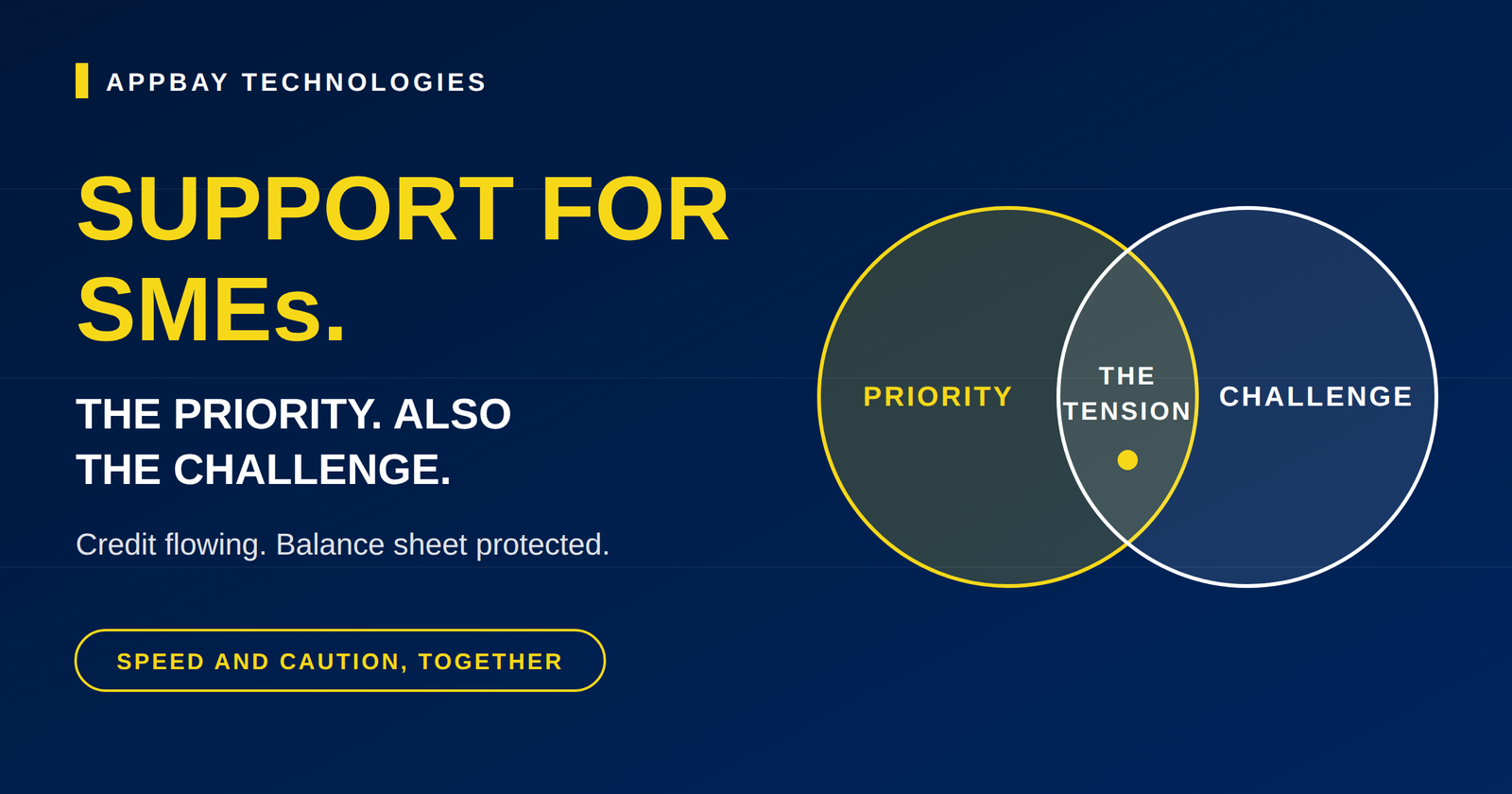
The Priority: Deploying New Capital Across Three Different Books
Strengthening the capital base to support expansion and long-term growth is a clear and worthwhile priority. The raise is tied to growing financing demand across infrastructure, corporate expansion, and household borrowing, in a more demanding capital and tax environment.
That creates a real operational question: is deployment tracked continuously across all three categories, or reconstructed after the fact for each review?
The Hidden Problem: Three Books, No Single View
Here’s where the operational gap can show up, inside a bank deploying new capital across several segments:
- Infrastructure financing, tracked separately – with its own credit process and reporting
- Corporate financing, its own process – a different risk profile, a different workflow
- Household financing, its own process – different again
- No consolidated deployment view – so a cross-segment picture means assembling three reports by hand
Why does this exist? Deploying capital across three structurally different lending categories means credit risk and capital allocation processes have to work across genuinely different risk profiles at once, not one lending motion. A specific rights issue amount is a headline figure, and it invites exactly this scrutiny.
Why This Matters Now
The rights issue closed. Now the board wants to see the capital landing where it was promised, category by category.
A named capital raise gets tracked against its stated purpose, not just its total. The question that follows isn’t rhetorical:
“Is each category on pace against the plan, continuously, or only when we reconstruct it for the next investor update?”
For the CFO and Head of Treasury, this plays out across three measures:
- Deployment-to-plan, per category – how each financing book is tracking against what was stated
- Time-to-consolidated-report – how long a cross-segment view takes to produce
- Capital buffer, verified continuously – not confirmed only at reporting dates
Without a continuous view, the bank has to reconstruct deployment evidence retroactively across three separate lending motions, rather than showing it as it happens.
An Honest Look at the Fit
We want to say this plainly: this is a credible extension, not a clean product match. Appbay’s core strength is in regulated operational workflows. Consolidating three structurally different financing categories into one deployment view is real cross-segment configuration work.
Where there is a credible fit: our Multi-Perspective Document Insight Copilot produces audience-specific summaries and reporting, and Audit IQ supports reporting and audit review. Both transfer directly. A cross-segment capital deployment tracking workflow is the extension built on top.
Here’s what that would actually involve:
Deployment Data Ingestion Per Category
Infrastructure, corporate, and household deployment data brought into one continuously updated view.
AI-Driven Consolidation and Pace Tracking
Deployment measured against the AED 2.59 billion plan, with gaps flagged automatically rather than discovered at the next review.
Human Treasury Review
Every flagged gap reviewed and interpreted by a person, the same judgment treasury would make anyway, with continuous evidence behind it.
Appian-Orchestrated Reporting Workflow and Audit Trail
One governed process feeding a board dashboard, not a reactive assembly exercise.
The practical starting point is a scoped 8-12 week proof of concept on one financing category: deployment tracking, AI consolidation against the full raise, human treasury review, and an Appian-orchestrated audit trail. That is proof before it covers all three categories, and a candid basis for a scoping conversation.
Why We’re Saying This Plainly
Being upfront matters more here than overstating the fit. The underlying capability is proven, but the cross-segment consolidation is new work. The honest starting point is to name that clearly and scope it with one category first.
This Pattern Isn’t Unique to One Bank
Any institution that raises capital for several named purposes will be asked whether it’s landing where it was promised. The banks getting ahead of this aren’t building three separate deployment trackers. They’re building one consolidated view across all categories from day one, rather than reconstructing it at the next investor update.
Let’s Compare Notes
We’re working with banks across the GCC tracking capital deployment across multiple financing categories after a raise. If your organization is facing the same question, we’d welcome the conversation.
Send us a message. This one’s genuinely about comparing notes, not a pitch.