
By Appbay Technologies
Three launches make the headline. Clearing each one through the same compliance review is the work that follows.
A Saudi bank is launching on three fronts at once: digital transformation, including a new travel app, expanded SME lending, and enhanced wealth management services. Each one has to meet the same local and international regulatory requirements. That ambition is real, and so is the queue it creates, since every new product joins the same compliance review.
This piece is a candid one. The fit is a good one with some configuration work, and we’ll be specific about which parts are which.
The Priority: Launching Across Three Business Lines at Once
Enhancing customer experience through digital initiatives, extending credit to SMEs to support growth and diversification, and building out wealth management services are all clear and worthwhile priorities. Each is also a stream of new products, features, and terms that must clear regulatory review before going live.
That creates a real operational question: does compliance review scale with launch volume, or does it become the limit on how fast the bank can move?
The Hidden Problem: One Review Team, Three Launch Streams
Here’s where the operational gap can show up, inside a bank launching across several business lines:
- Product terms read manually – each proposal and its supporting documents reviewed file by file
- Rules re-checked per launch – the same requirements compared again for every new product
- Product owners chasing answers – teams waiting on feedback without visibility of where their launch sits
- Launches waiting for sign-off – go-live dates set by review capacity, not by readiness
Why does this exist? Digital launches arrive as frequent, smaller releases, so review is a continuous load rather than a one-off event. SME lending growth brings new product variants and terms that need credit policy, documentation, and regulatory review. Wealth products are heavily regulated, and each new offering adds suitability and disclosure documents to check. When all three route through the same compliance function, the stated regulatory challenge meets the stated competitive and investment challenges in the same queue.
Why This Matters Now
The app launched. The lending book opened. What did each one return?
The board approved three launches. It now wants time-to-revenue and cost per launch on the next pack. The question that follows isn’t rhetorical:
“How quickly does each new product get to market, and what did the review cost us?”
For the COO, CCO, and CDO, this plays out across four measures:
- Time-to-market per launch – how long each product waits between proposal and go-live
- Cost per product launch – the real cost of taking each one through review
- Time-to-revenue, new products – how soon each launch begins to earn
- Wealth revenue versus launch plan – whether the newest offering is tracking against its promise
Without that visibility, launch speed is capped by review capacity while competitors move faster and the technology investment waits to show returns.
An Honest Look at the Fit
We want to say this plainly: this is a good fit, with configuration work. Appbay’s core strength is regulated compliance workflows. A new-product approval flow, covering intake, routing, review, sign-off, and audit trail, is something Appian suits directly.
What transfers directly:
- Master Compliance Copilot, which compares documents against criteria, applies to checking product documents against regulatory requirements
- Audit IQ-style reporting applies to the audit trail
What is configuration work, not a ready product:
- Encoding the bank’s own regulatory checklist and the rules for each product type
Interpretation of regulation and the final approval stay with the bank’s compliance function. AI supports the analysis and does not make the call.
Here’s what that would actually involve:
Ingest the Product Proposal and Terms
Documents for each new product brought into one governed workflow.
AI Maps the Product to Regulatory Requirements
Product documents checked against the bank’s own regulatory checklist.
Gaps and Conflicts Flagged
Issues surfaced before a reviewer opens the file, with the evidence attached.
Compliance Officer Decides
Every sign-off remains with a person.
Auto-Route to the Product Owner
Teams see where their launch stands and what is outstanding.
Full Audit Trail
Every step and decision on record.
The practical starting point is a scoped 8-12 week proof of concept on one product type, for example one SME lending product, rather than all three launches at once. It would show whether checking products against the rulebook up front shortens time-to-sign-off without loosening review.
Why We’re Saying This Plainly
Being specific matters more than a broad claim would. This problem sits close to what Appbay already builds, so the honest message is that we can scope it clearly, and that encoding each bank’s own rules is configuration work. Naming that up front is more useful than overstating it.
This Pattern Isn’t Unique to One Bank
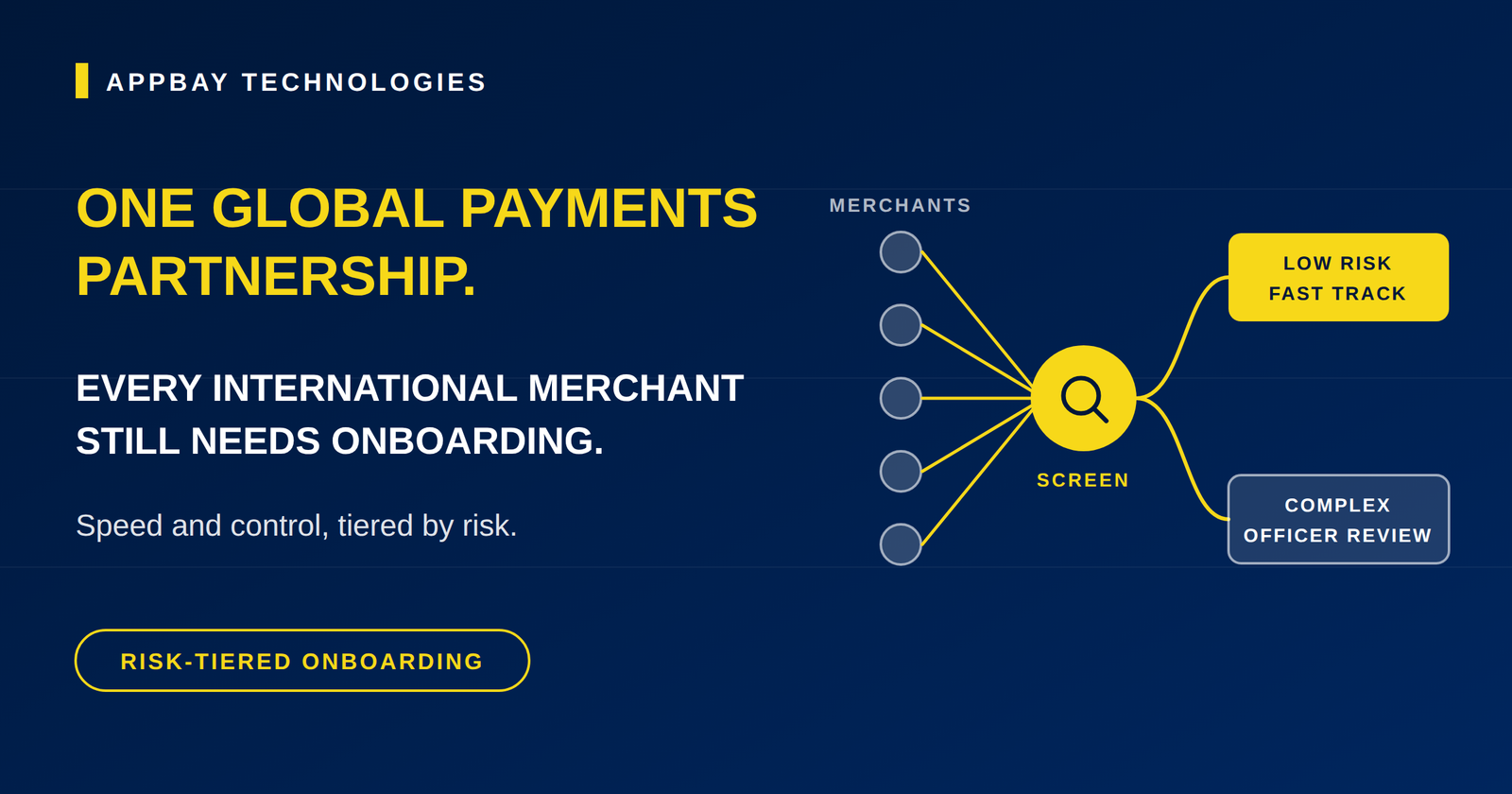
Any institution launching across several business lines will face the same constraint: launch ambition scales, but compliance review scales with reviewers. The banks getting ahead of this know that not every product needs the same depth of review. They check new products against the rulebook up front and route by risk, so reviewers spend their time on the real exceptions.
Let’s Compare Notes
We’re curious how other compliance teams are keeping pace with simultaneous product launches. If your organization is working through the same challenge, we’d welcome the conversation.
Send us a message. This one’s genuinely about comparing notes, not a pitch.