
By Appbay Technologies
A facility closes. The press release goes out. And then the real work starts-because an externally co-funded facility doesn’t just answer to the internal board anymore.
A bank recently secured a $50 million MSME financing package with an international development partner-a genuinely significant commitment to small business growth. But the facility closed. Deploying it, and proving it, to a partner who’s also watching is the ongoing work.
This is the operational reality that sits quietly underneath every co-funded facility announcement.
The Priority: Supporting MSMEs at Scale
Providing financing to micro, small, and medium enterprises is a clear strategic priority-and doing it through a named, externally-funded facility signals real credibility and commitment to economic development.
But a co-funded facility with a named international development bank changes the reporting equation entirely. Reporting isn’t only internal anymore. The funding partner itself expects genuine visibility into how the capital is being deployed and performing-not a quarterly summary, but ongoing, credible proof.
The Hidden Problem: Thin-File Borrowers, Tight Deployment Clock
Here’s where the operational strain actually shows up, inside most MSME lending teams managing a facility like this:
- No standard credit file-MSME applicants typically lack the financial history that standard underwriting relies on
- Case-by-case manual review-each applicant assessed individually, without a consistent, repeatable process
- Underwriters improvising per applicant-decisions made without a scalable framework behind them
- Facility deployment falling behind-underwriting speed can’t keep pace with the deployment clock the facility was built around
Why does this exist? MSME applicants are typically thin-file borrowers requiring alternative underwriting data. A named, externally-funded facility creates a specific deployment clock and reporting obligation to the funding partner-not just internal board reporting. Both pressures land on the same underwriting team, at the same time.
Why This Matters Now
The facility’s size, partner, and purpose are all publicly named. That visibility cuts both ways: it’s a strong credibility signal when deployment goes well, and a very public gap when it doesn’t.
The board and the funding partner aren’t asking the exact same question-but they’re both circling the same underlying concern:
“How fast is the capital actually reaching MSMEs, and can we prove it?”
For the Head of MSME/SME Banking, this plays out as a live, dual-audience reporting problem, measured against concrete metrics:
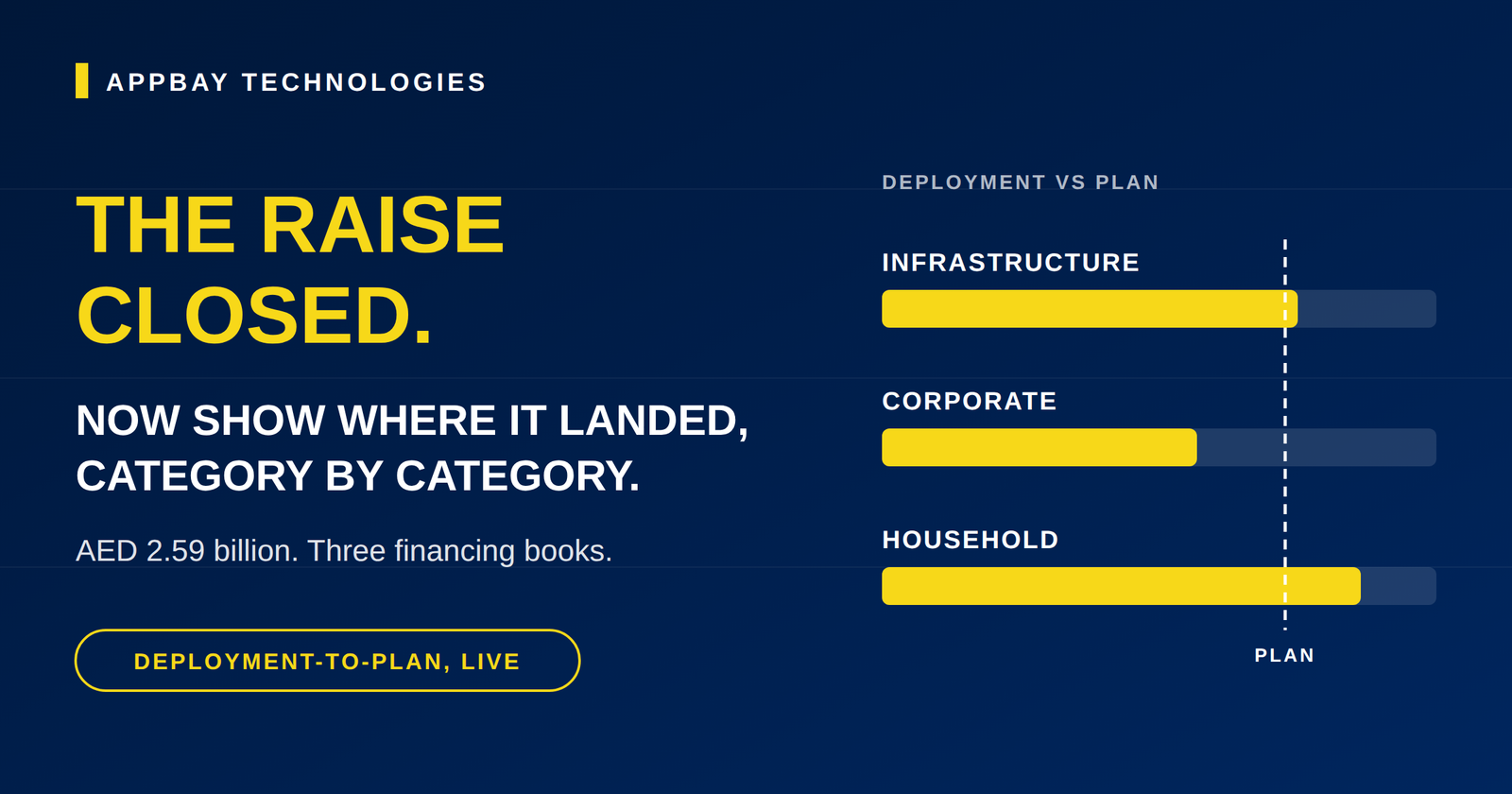
- Deployment-to-target pace-is the facility moving at the speed it was designed for?
- Time-to-decision per applicant-how long does each MSME actually wait for an outcome?
- Partner reporting accuracy-can the numbers shown to the funding partner be trusted and defended?
Slower deployment doesn’t just undercut the growth ambition. It reflects on the credibility of the partnership itself-for both the bank and the funding partner.
The Fix: One System, Two Audiences
The instinct under this kind of pressure is often to solve underwriting speed and reporting quality separately-faster processing on one side, a manual reporting effort bolted on for the funding partner on the other. That approach just moves the bottleneck instead of removing it.
The better path combines Appbay’s LoanSphere and Multi-Perspective Document Insight Copilot-not as two disconnected tools, but as one system producing both underwriting decisions and dual-audience reporting from the same underlying data.
1. Alternative Data Intake
Capturing what thin-file MSME applicants actually have available-not forcing them through documentation standards built for enterprise borrowers.
2. AI-Assisted Decisioning
Every recommendation comes with a confidence score attached, so underwriters know exactly how much weight to place on the AI’s assessment.
3. Underwriter Approval
A person makes the final call on every application. Speed comes from better-prepared decisions, not from removing judgment.
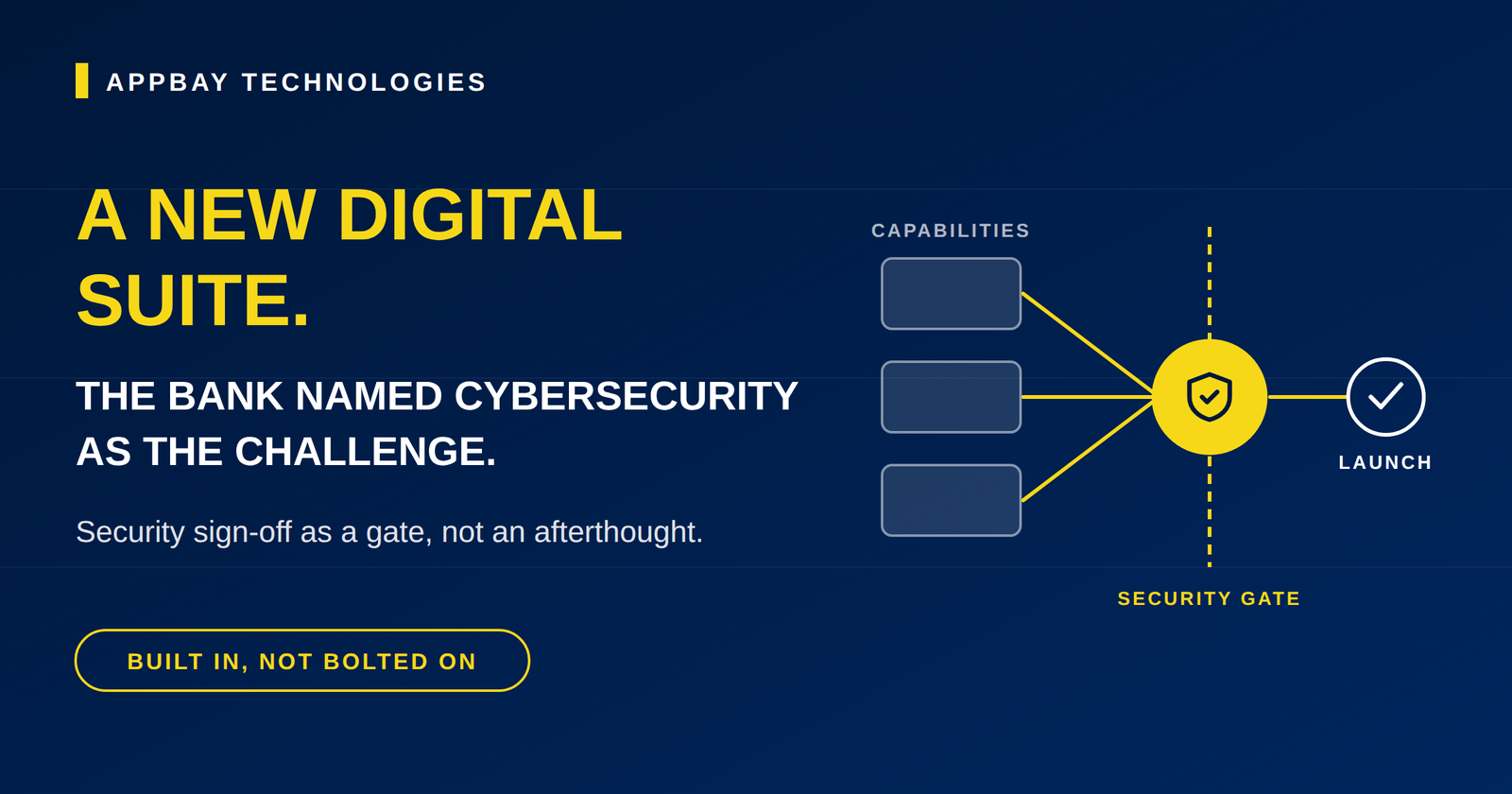
4. Appian-Orchestrated Workflow
One governed process runs from intake through decision-consistent, not case-by-case improvisation.
5. Audit Trail
Every step is traceable and defensible, which matters as much to the funding partner as it does internally.
6. Dual-Format Reporting
One board dashboard. One EBRD-facing deployment report. Both generated from the same underlying system-not two separate manual efforts pulling from different sources.
This turns “choose between deployment speed and reporting quality” into “one system that delivers both.”
Proof, Not a Full Underwriting Overhaul
- 8-12 week proof of concept-scoped to one MSME lending product within the facility
- AI-assisted decisioning-built specifically for thin-file applicants from day one
- Human approval retained-automation speeds the review, it doesn’t replace underwriter judgment
- Appian-orchestrated audit trail-a defensible record for every decision, ready for scrutiny from either audience
- Dual-format reporting-proof, ready for both the board and the funding partner, from week one
This isn’t a full underwriting transformation program. It’s a fast, scoped proof that one system can genuinely serve two audiences-on one product-before extending across the wider facility.
This Pattern Isn’t Unique to One Facility
Any bank managing an externally co-funded MSME or development-finance facility will face this same dual-audience pressure. Internal reporting alone isn’t enough when a funding partner is watching the same numbers, through a different lens. The institutions getting ahead of this aren’t running two separate reporting processes and hoping they stay aligned-they’re building one system that answers both audiences from the start.
Let’s Compare Notes
We’re working with banks managing externally co-funded MSME facilities on exactly this-deployment speed and dual-audience reporting from one system. If your organization is navigating a similar partnership, we’d welcome the conversation.
Send us a message to discuss your MSME facility deployment roadmap.